



To ensure a fair, equitable, and financially sustainable service pension system, on Wednesday, 3 December, the Saeima approved amendments to nine laws that will introduce gradual changes to the current service pension regulation starting in 2027.
The amendments will not affect those already receiving a service pension or those entitled to receive the pension before these amendments enter into force, namely, those who qualify for a service pension based on age and length of service, even if they remain employed.
“Until now, service pensions were granted depending on how long a person had worked in a particular post or profession and their age. However, regulations were developed individually across sectors—each with its own special conditions. It created inequality between professions, as the conditions for granting service pensions were more lenient for some and stricter for others. The methods of calculation differed as well. Moreover, the conditions were not reviewed on a regular basis to reflect the changes in the labour market and various sectors, and the cost to the State budget kept increasing,” previously stated Anda Čakša, Chair of the Budget and Finance (Taxation) Committee, which is responsible for advancing the draft laws in the Saeima.
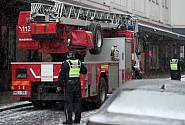
The amendments provide for the gradual adjustment of the system affecting employees who until now could retire before the general retirement age, including soldiers, employees working in the system of the Ministry of the Interior, border guards, fire-fighters, and others. Going forward, service pensions will only be granted to people whose work poses a heightened risk or threats to life or health, for instance, to fire-fighters and rescuers.
The changes have been introduced to mitigate disparities between service pension recipients and the rest of the society, thereby moving towards a fair overall system. Implementation is intended to start in 2027, gradually introducing unified principles and a transparent funding model. In addition, social protection will be maintained for those whose work involves special risks or public security.
The amendments provide for a gradual increase of the required age and length of service by six months every year for five years, as well as the exclusion of the last two months of service from the pension calculation. The calculation formula will also change for persons who, as of 1 January 2027, will have accumulated less than 10 years of service. The pension will be calculated based on the salary during the last ten calendar years, ending two months before retirement.
The amendments also intend to reduce the minimum and maximum amount of service pensions by 10 to 20 percent, equalising the amount across services, including a five-percent reduction for persons dismissed or released from their post.
Prosecutors and judges will no longer qualify for service pensions and will receive a special pension instead. Diplomats will no longer receive service pensions. The amendments will also affect ballet, circus, and choir artists, puppeteers, orchestra musicians, soloists, vocalists, and theatre actors, providing support measures for these professions, including reskilling opportunities for other careers.
According to the amendments, service pensions will no longer apply to positions and professions where employee duties do not involve regular threats to life and health. This change also applies to employees with a supporting function.
The amendments stipulate that the length of service calculation may also include the period of employment in the private sector, but not exceeding 20 percent of the total length of service. Service pensions will be paid until the person reaches the general retirement age. After that, payment will cease, and the person will receive an old-age pension calculated under the general procedure based on their social insurance contributions.
Amendments to the service pension system have been proposed, among other reasons, due to its rapidly growing fiscal burden—according to the explanatory note, in five years, the State budget expenditure for the current pension system would exceed EUR 200 million annually.
The Saeima approved amendments to nine laws: the Law on the Service Pensions of Employees with Special Service Ranks Working in the System of the Ministry of the Interior; the Law on Service Pensions for Military Persons; the Law on the Course of Service of Officials with Special Service Ranks Working in Institutions of the System of the Ministry of the Interior and the Prison Administration; the Law on Service Pensions for Diplomats; the Law on Service Pensions for Officials of the Corruption Prevention and Combating Bureau; the Law on Service Pensions of Employees of the State Emergency Medical Service Involved in Ensuring of Emergency Medical Assistance; the Law on the Service Pensions of the Artists of State and Local Government Professional Orchestras, Choirs, Concert Organisations, Theatres, and Circus and the Allowance for Creative Work of Ballet Artists; the Law on Service Pensions of Officials of State Security Institutions; and the Military Service Law.
The amendments will come into force gradually, starting in 2027.
Saeima Press Service